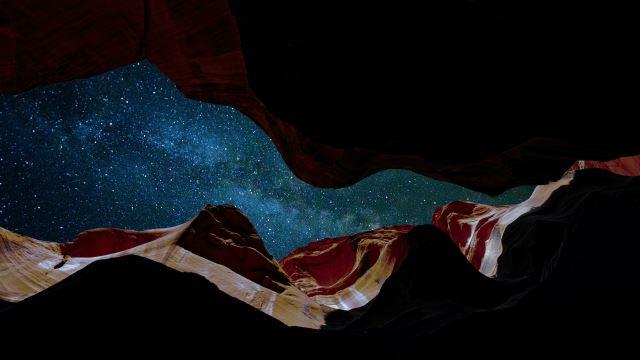
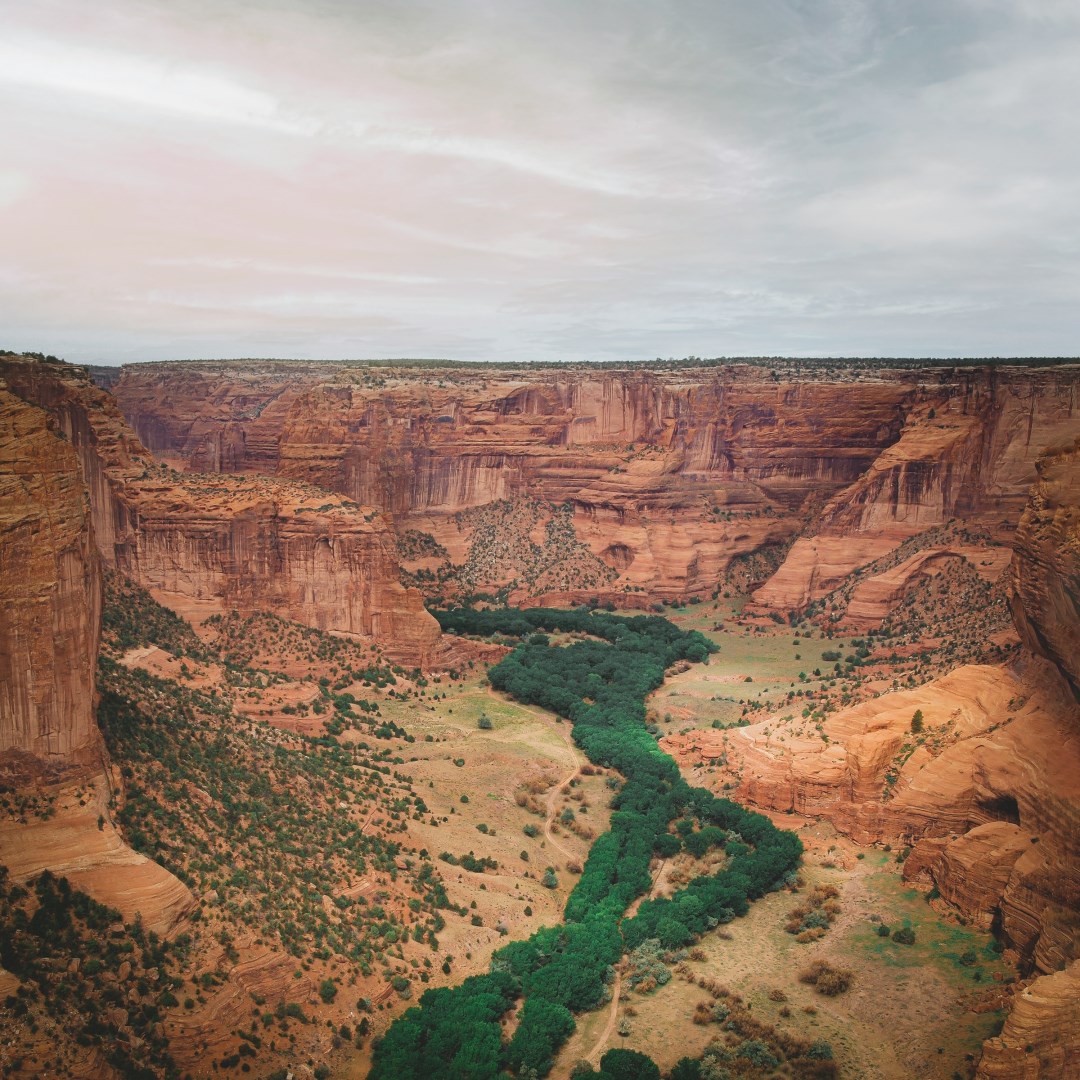
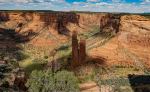
Canyon de Chelly National Monument lies in northeastern Arizona on Navajo Nation land, surrounding a network of deep sandstone canyons near Chinle. The monument is distinctive because it is both a protected landscape and a living community, with Diné families continuing to farm, raise livestock, and maintain homes within the canyon. Sheer red and tan cliffs rise above narrow canyon floors where cottonwoods, fields, and streams contrast with the surrounding high-desert terrain. The landscape has supported human communities for nearly 5,000 years, making Canyon de Chelly one of the longest continuously inhabited landscapes in North America.
The cultural identity of Canyon de Chelly is closely connected to the Diné, as well as to Ancestral Puebloan and Hopi traditions. Archaeological remains include villages, cliff dwellings, petroglyphs, and pictographs preserved throughout the canyon system. White House Ruin is one of the best-known sites, while Mummy Cave contains a large ancestral Puebloan village built within a cliff alcove. The canyon also holds stories from Navajo history, including the period of forced removal known as the Long Walk. Today, the National Park Service and Navajo Nation jointly manage the monument, reflecting its continuing cultural and spiritual importance.
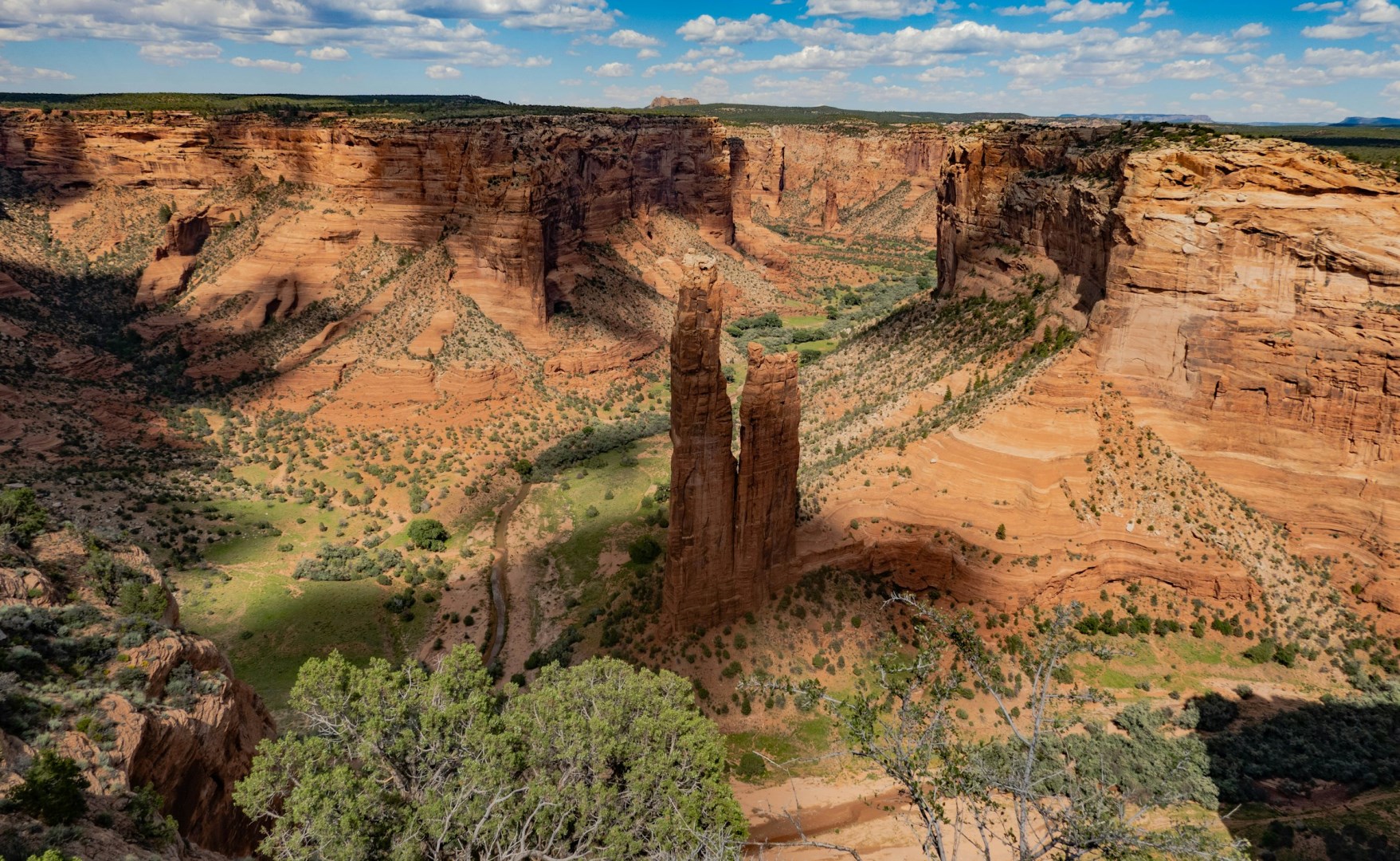
The canyon walls are among the monument's defining natural features, rising as much as 1,200 feet above the canyon floor in places. Spider Rock, a tall sandstone spire, is one of the most recognizable landmarks and has an important place in Diné tradition. Visitors can view the canyon from the North and South Rim Drives, which lead to overlooks such as Spider Rock, Mummy Cave, and Massacre Cave. The White House Trail provides the only public hiking route into the canyon without a permit or authorized Navajo guide. Other canyon areas can be explored through guided tours led by Navajo operators.
Agriculture remains an important part of Canyon de Chelly's landscape, with fields and orchards appearing along the canyon floor beneath the towering cliffs. Navajo families have traditionally grown corn and other crops in the fertile canyon soils, and peach cultivation has a particularly strong cultural connection to the area. Native vegetation includes cottonwoods, pinyon-juniper woodland, desert shrubs, and plants adapted to the canyon's water sources. The combination of working farms, archaeological sites, sandstone formations, and a resident Diné community makes Canyon de Chelly different from many protected Southwestern landscapes, where human habitation is largely absent.